The partition of the Indian sub-continent in 1947 August, all but obliterated this small,active and illustrious Indian Muslim Community, at least on paper and in statistics, sincemost of these Muslims acquired a new classification with the establishment of a new Muslim Nation.
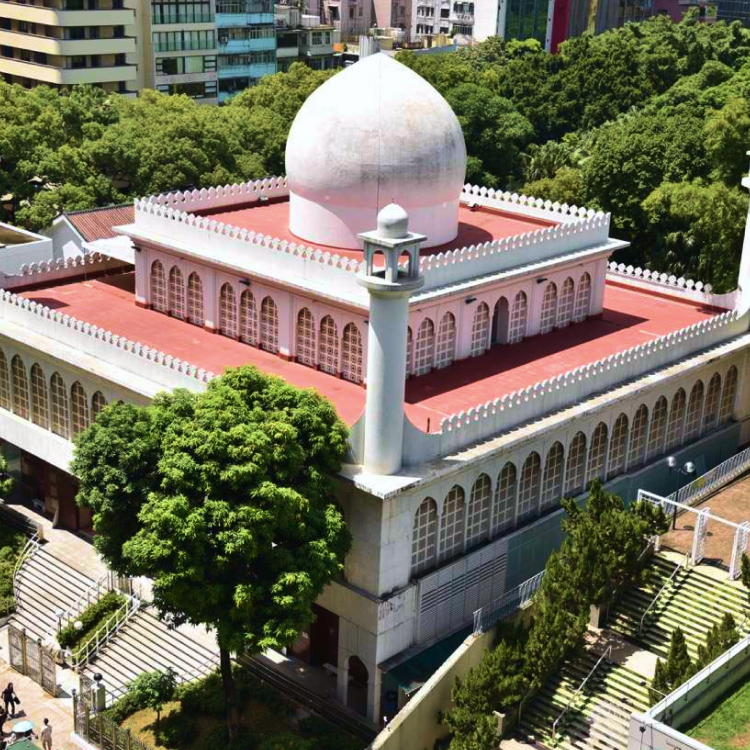
The presence of Indian Muslims in Hong Kong dates to 26 January 1841, when the first contingent of Indian troops arrived at Possession Point. This was soon followed by Indian Muslim traders. By October 1867, records show that the military force included 377 Indians—predominantly Muslims from Northwest and South India—alongside Chinese and European personnel.
Indian Muslims, both military and civilian, settled near Possession Point, particularly around Lascar Row. They gathered for Friday prayers in open areas, enduring Hong Kong’s unpredictable weather. Recognizing the need for a permanent place of worship, the community was granted a 999-year lease on 3 December 1849 to build a mosque at 30 Shelley Street. Although the lease was granted in 1849, the Shelley Street Mosque was constructed around 1890 through contributions from Indian worshippers and later expanded in 1911 with support from a Bombay merchant.
Following the cession of Kowloon to Britain under the Treaty of Nanjing (1842), Indian Muslim servicemen stationed at Whitfield Barracks in Tsim Sha Tsui established a prayer ground, which led to the construction of the Kowloon Mosque in 1896.
By the end of World War I, the Shelley Street Mosque and the Muslim cemetery at Happy Valley were brought under formal administration by a rule promulgated in 1917. Governance was managed by representatives from the Islamic Union and the Shia Association until World War II. During the Japanese occupation, this body was dissolved and replaced by a single administrator appointed by the occupiers.
After the war, on 17 June 1947, an interim committee of eight members was formed to manage the Muslim Trust. For the first time, this included representatives from the Chinese Muslim Cultural & Fraternal Association, reflecting the growing diversity of Hong Kong’s Muslim population
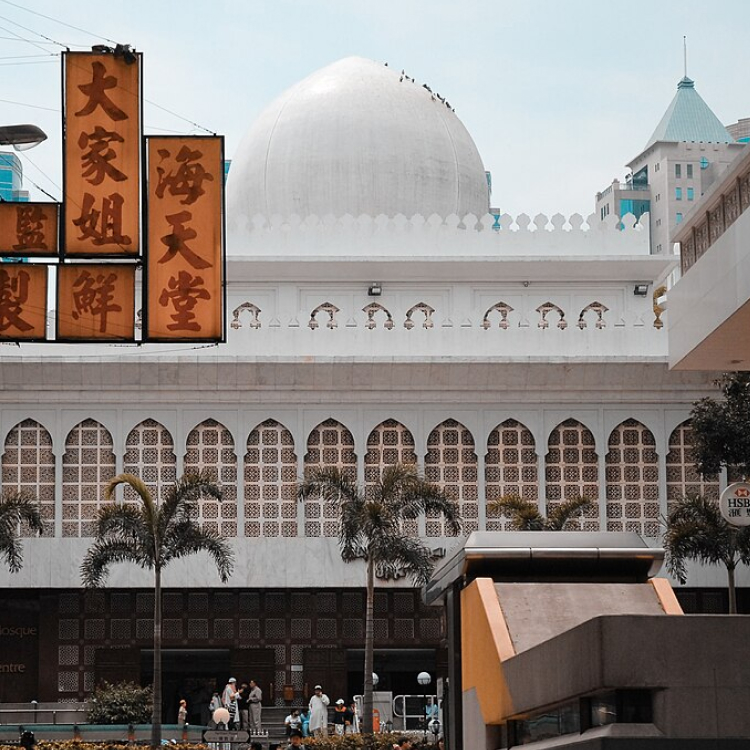
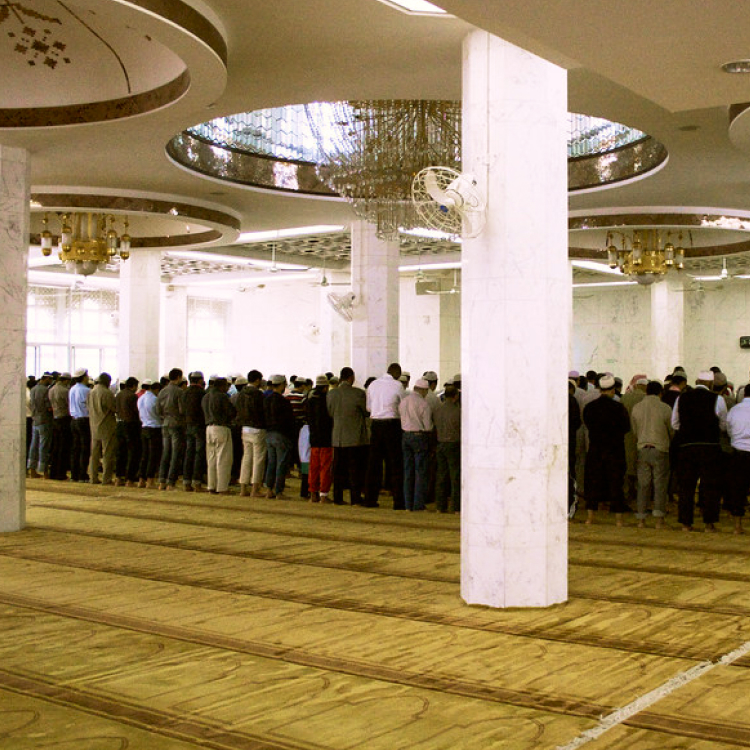
The partition of India and demographic shifts following World War II led to a decline in the proportion of Indian Muslims in Hong Kong. The departure of Muslim troops from Whitfield Barracks resulted in the deterioration of the Kowloon Mosque by the early 1960s.
During this period, a new wave of Indian Muslims arrived in Hong Kong, primarily as gem merchants trading in precious stones from India, Ceylon (Sri Lanka), and Burma (Myanmar). Initially settling on Hong Kong Island, many relocated to Tsim Sha Tsui by the late 1960s, revitalizing the Kowloon Mosque and forming a vibrant community around it.
Despite their growing presence, Indian Muslims lacked formal representation in Islamic community affairs. The absence of title deeds for the Kowloon Mosque property—located in a prime area—led to disputes with the Urban Council and the Royal Hong Kong Police Force. The Indian Muslim community, though active, lacked an organized body to advocate for its interests.
To address these challenges and represent the unique national, linguistic, and cultural needs of Indian Muslims, the Indian Muslim Association was formally established in 1979 under the leadership of Alhaj B.S. Abdul Rahman. After extensive negotiations, the Association was admitted to the Incorporated Trustees of the Islamic Community Fund of Hong Kong.
Indian Muslims played a pivotal role in the reconstruction of the Kowloon Masjid and Islamic Centre: